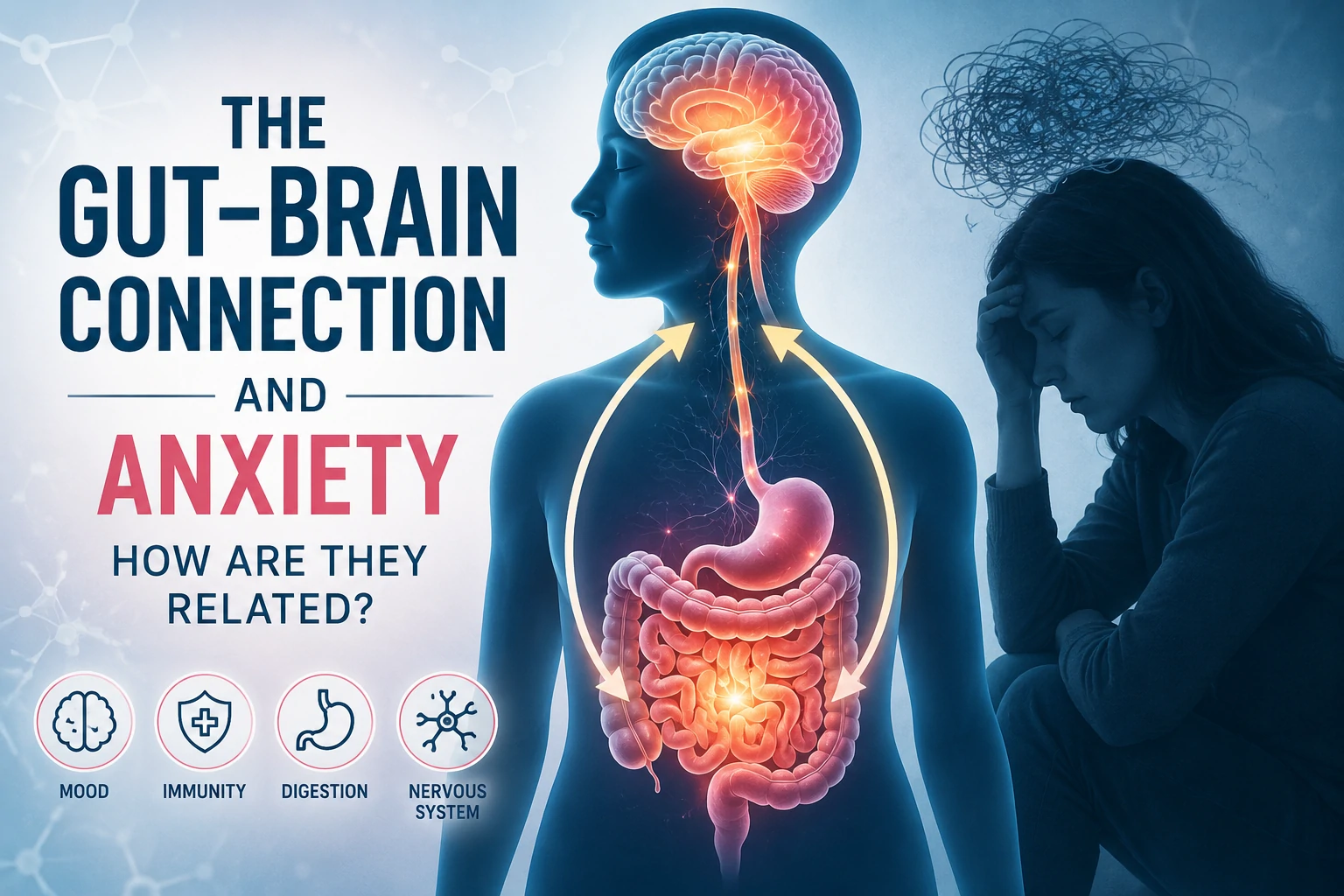
The gut-brain connection and anxiety can influence each other in both directions. Digestive discomfort may sometimes trigger fear and nervousness, while stress can worsen bloating, diarrhea, nausea, or upper abdominal discomfort.
This does not mean that all anxiety problems are caused by the digestive system. However, some people may develop a repeating cycle involving physical symptoms, fear, increased anxiety, and more severe digestive symptoms.
What Is the Gut-Brain Axis?
The gut-brain axis is a two-way communication system that connects the digestive system with the central nervous system. This communication involves the nervous system, hormones, the immune system, and metabolic processes.
Through this connection, the brain can affect intestinal movement and sensitivity. At the same time, signals coming from the digestive system may influence mood, stress responses, and feelings of anxiety.
How Does Anxiety Affect the Digestive System?
During anxiety, the body may enter a “fight-or-flight” state. The heart may beat faster, muscles may tense, and the activity of the digestive system may change.
As a result, some people may experience:
- Diarrhea or an urgent need to use the bathroom
- Bloating and gas
- Nausea
- A tight or uncomfortable feeling in the stomach
- Changes in appetite
- Constipation
Stress may also make the digestive system more sensitive. In this situation, normal gas or intestinal movement may feel unusually uncomfortable or alarming.
Can Digestive Problems Cause Anxiety?
A digestive problem can become a trigger for anxiety, especially when symptoms begin suddenly or when a person fears that something dangerous is happening.
For example, diarrhea, nausea, or upper abdominal discomfort may lead to thoughts such as:
- “What if my condition gets worse?”
- “What if I have a serious illness?”
- “What if I lose control?”
- “What if I cannot find a bathroom?”
These thoughts increase anxiety. Anxiety may then activate the digestive system even more, making the original symptom worse.
The Physical Symptom–Anxiety Cycle
In many cases, the process may develop in the following way:
Digestive discomfort → negative or frightening interpretation → fear → physical anxiety symptoms → worsening digestive symptoms → greater fear.
This cycle is a real physiological and psychological process. The symptoms are not imaginary. However, an intense sensation does not always mean that a serious illness or actual loss of control is occurring.
Disorders of Gut-Brain Interaction
Irritable bowel syndrome and functional dyspepsia are often described as disorders of gut-brain interaction. People with these conditions may experience genuine digestive symptoms without obvious structural damage to the digestive organs.
Irritable bowel syndrome may change bowel movements and cause diarrhea, constipation, or a combination of both. Functional dyspepsia may cause upper abdominal discomfort, early fullness, bloating, and heaviness after eating.
However, these conditions should not be diagnosed based on symptoms alone. A healthcare professional may need to exclude other possible causes.
Can Treating the Digestive Problem Reduce Anxiety?
When digestive symptoms are the main trigger for anxiety, treating the physical problem may also reduce nervousness and fear. However, anxiety disorders usually do not have only one cause.
Possible contributing factors may include:
- Long-term stress
- Genetic predisposition
- Lack of sleep
- Strong fears about personal health
- Previous panic attacks
- Excessive caffeine intake
- Thyroid or other medical conditions
An anxiety disorder is different from temporary everyday worry. It may continue for a long time, occur repeatedly in different situations, and interfere with daily activities.
What Should You Do When Symptoms Appear?
The first step is to obtain a medical evaluation of the physical symptoms, especially when they are new, persistent, or becoming more severe.
It may also help to monitor:
- Which foods make the symptoms worse
- When and under what conditions does anxiety begin
- How often do bowel habits change during the day
- Whether anxiety improves after the digestive discomfort passes
During an anxiety episode, it may help to slow down your breathing, focus on the environment around you, and remind yourself that intense fear does not necessarily mean that you are in immediate danger.
When Should You See a Doctor?
Medical advice is recommended when diarrhea does not improve, repeatedly returns, or occurs together with persistent upper abdominal discomfort.
Urgent medical attention may be necessary if you experience:
- Blood in the stool or black stool
- Severe or sudden abdominal pain
- High fever
- Persistent vomiting
- Fainting or confusion
- Signs of dehydration
- Unexplained weight loss
Conclusion
The gut-brain connection and anxiety are closely linked. Anxiety can change the activity of the digestive system, while digestive discomfort can activate fear and panic-like sensations.
However, it is not appropriate to explain every digestive symptom as stress or anxiety. The most effective approach is to evaluate the physical problem medically while also managing anxiety at the same time.
Medical Disclaimer: This article is intended for general informational purposes only. It does not replace medical advice, diagnosis, or treatment from a qualified healthcare professional.
You can go to the HOME PAGE
You can talk to me via Instagram

My name is Edmon Mnatsakanyan.
I am the creator and author of this website.
For many years, I have personally experienced anxiety, panic attacks, driving-related anxiety, derealization, physical anxiety symptoms, and the fear that often comes with not understanding what is happening inside your own body.
I am not a doctor, psychologist, therapist, or medical professional.
I created this website to share my own experiences, personal observations, thoughts, and the lessons I have learned during my journey with anxiety and panic.
My goal is not to diagnose anyone or provide medical treatment.
I simply want to write honestly about the things I have personally experienced and the questions I have asked myself for years.